📄 Digital book in PDF · read it on your phone or print it
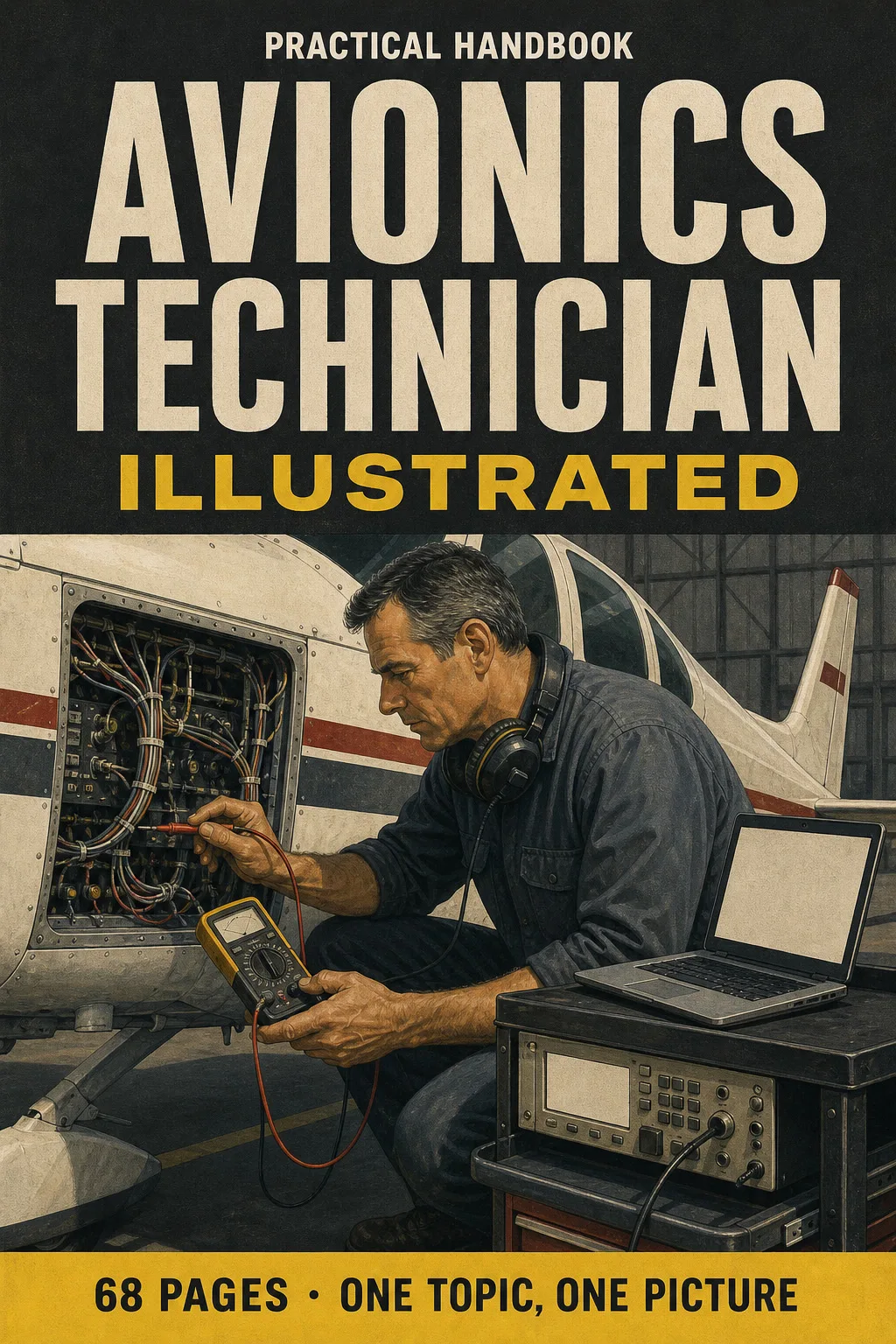
Every system in the same order, every time: the drawing first, then the numbers and steps you need. Ohm's law, wiring and wire sizing, VHF COM, VOR and ILS, transponders and ADS-B, test equipment and troubleshooting, one topic per page. 68 illustrated pages.
🔒 Secure checkout · PDF by email · 30-day guarantee
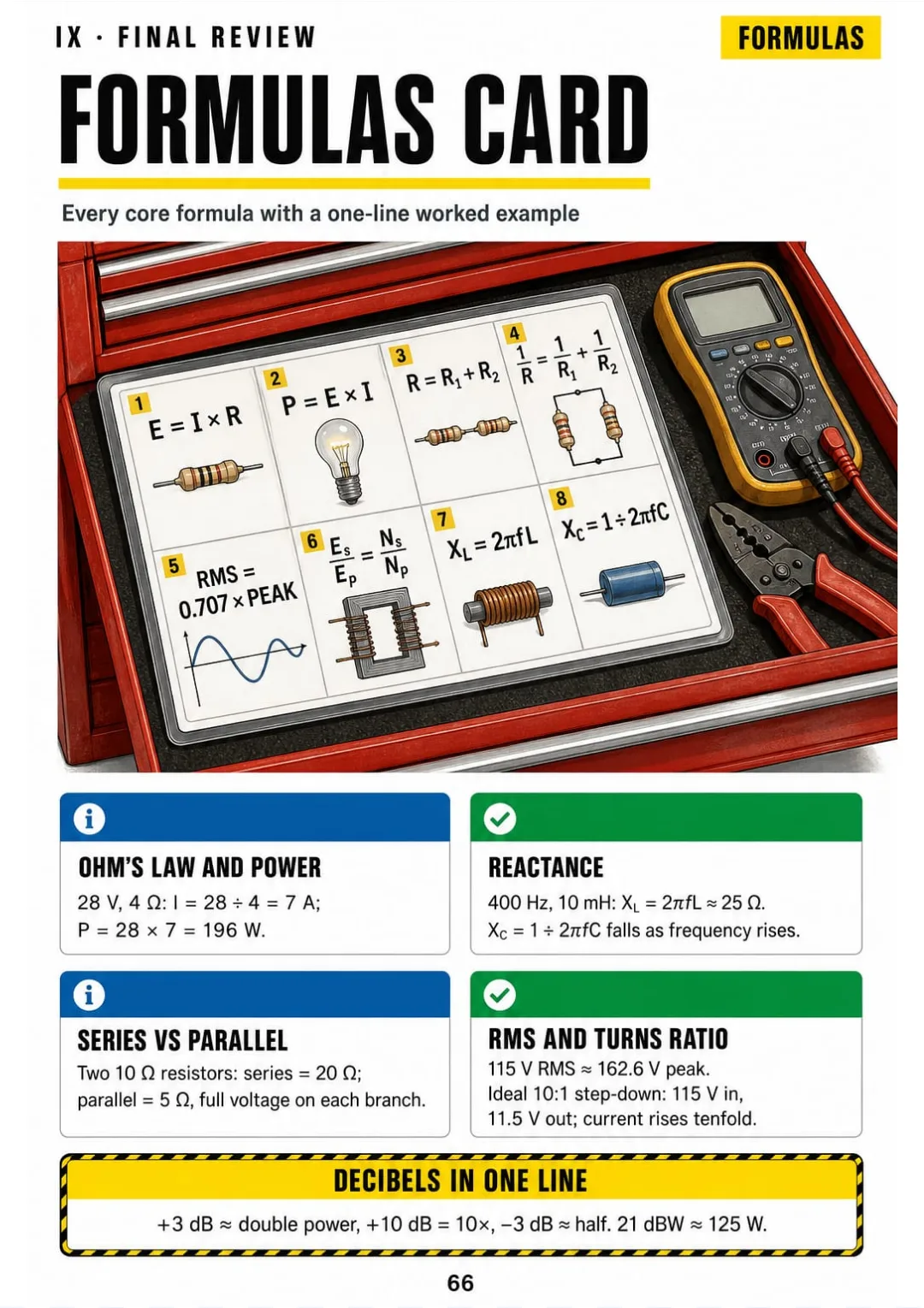
Every page has one big drawing and a box with the numbers, rules and steps you need to know:


Swipe to see more →
These are real pages from the book. The table of contents is the full one: 9 parts and 64 topics.
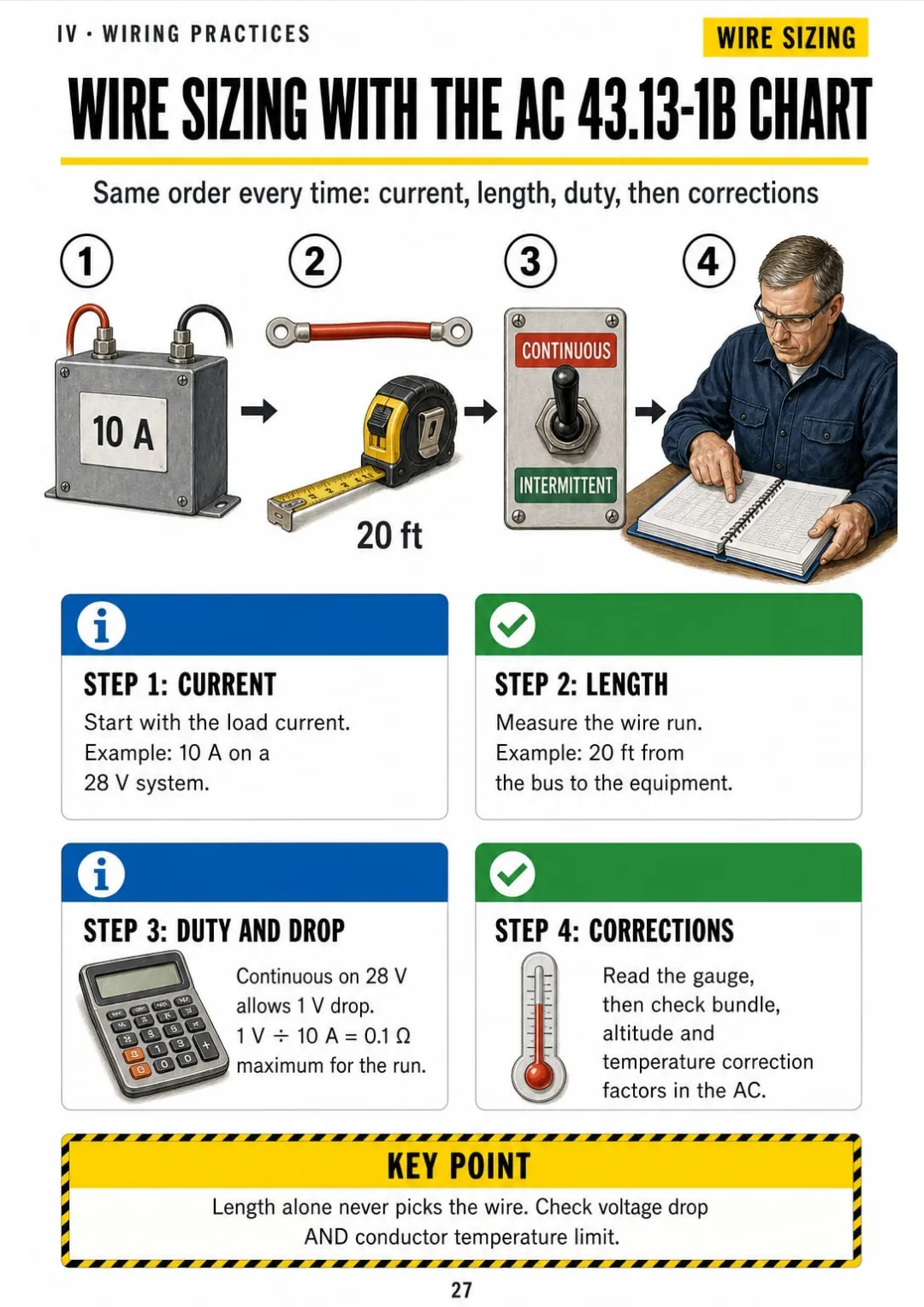
You're running a new wire for a 10-amp load, 20 feet back to the bus on a 28-volt airplane, and you need the gauge before your lead comes back.
You open AC 43.13-1B. The chart is there, but the steps around it are spread across paragraphs: current, length, continuous or intermittent, bundle and altitude corrections. Nothing tells you what comes first.

In the book, that same job is one page. The chart is drawn with your 10 A, 20 ft, 28 V run already traced on it, and four boxes in order: current, length, duty, then corrections.
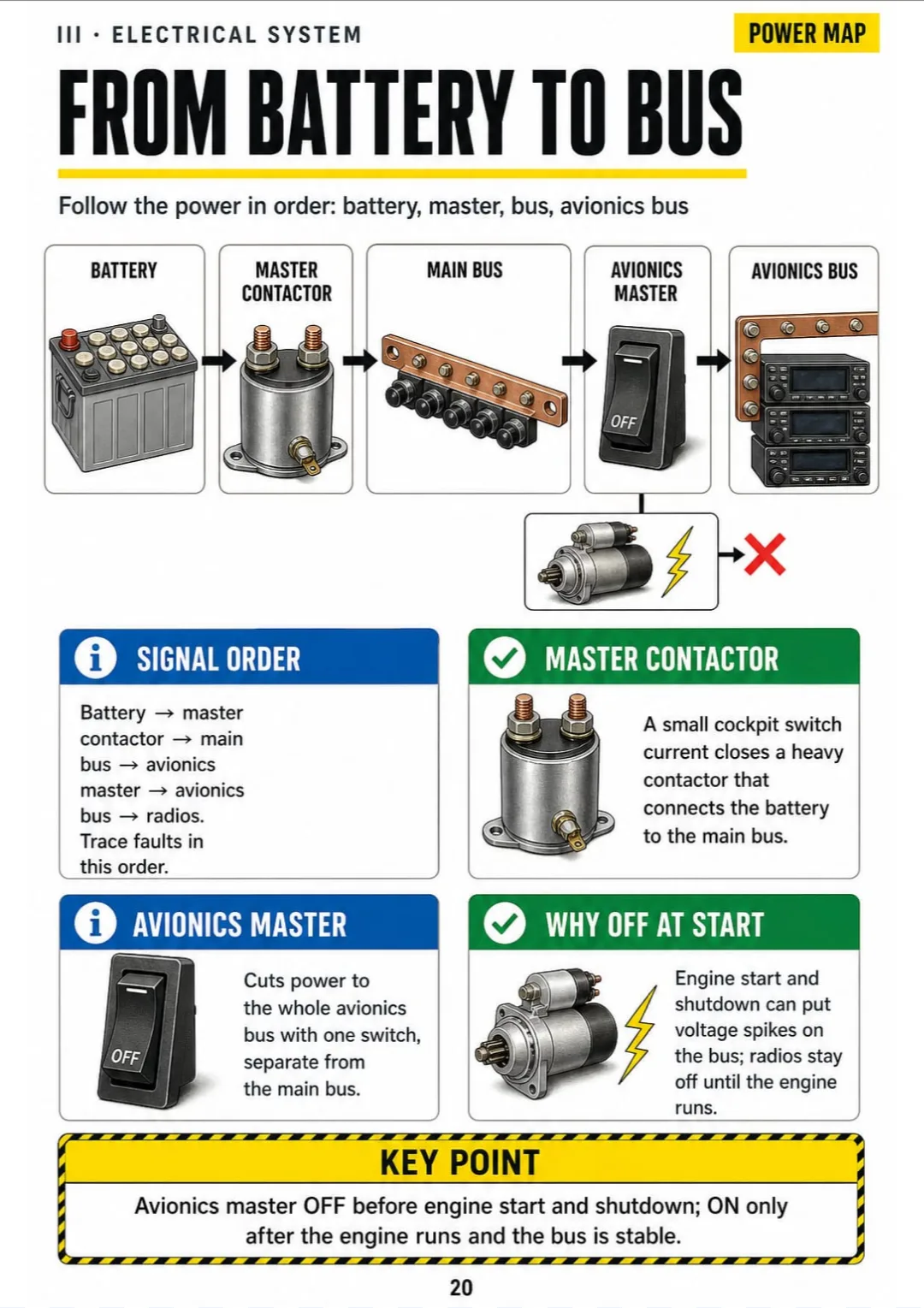
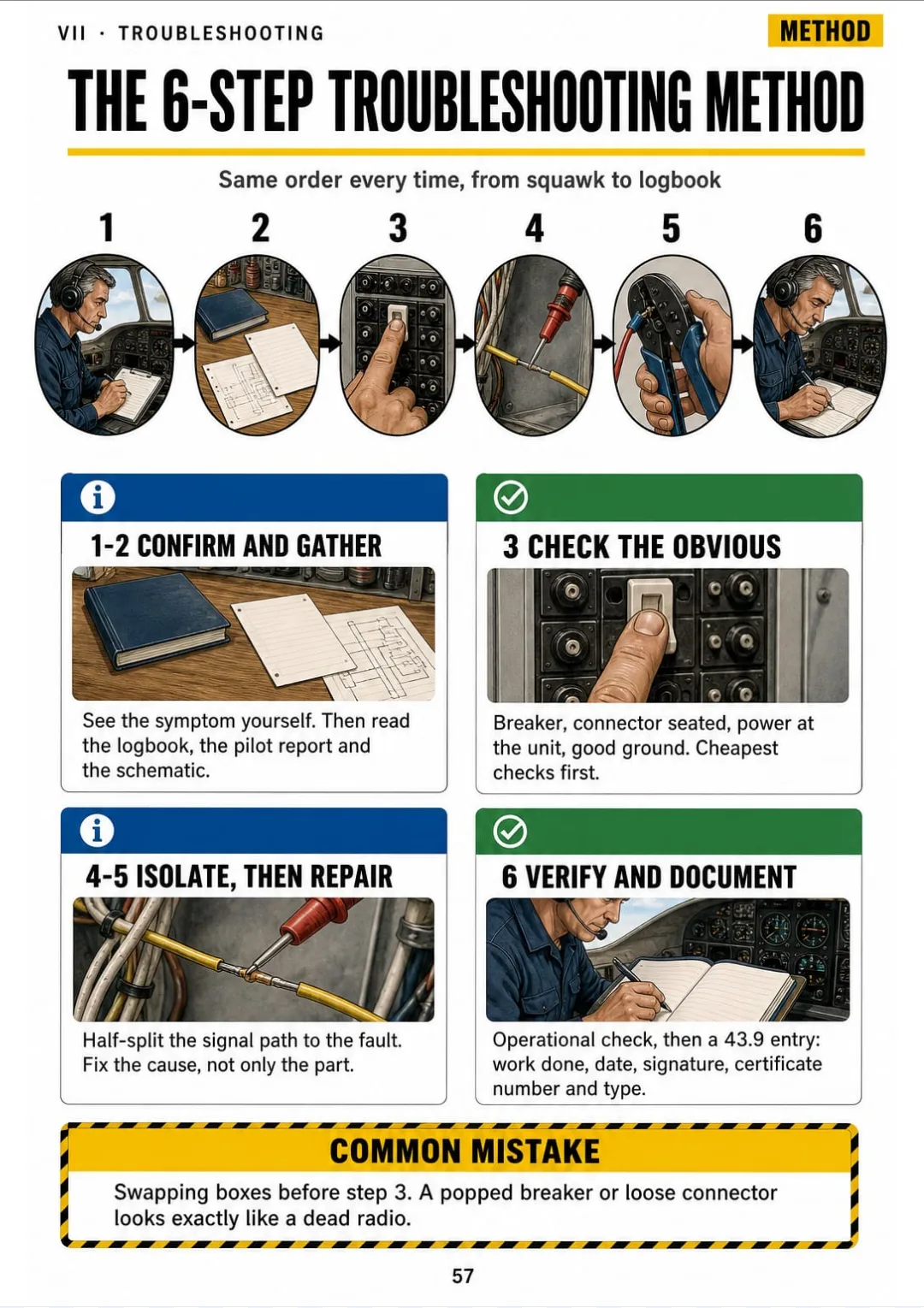
The rest works the same way. The power path from battery to avionics bus, the VOR radial, the transponder and altimeter tests, the 6-step troubleshooting method: each one has its own page.
You see the order, you pick the wire, and you move on to the next job without reopening the handbook.

DC circuits, AC and electronics, the aircraft electrical system, wiring practices, comm/nav radios, transponders and ADS-B, test equipment and troubleshooting, regulations and records, and a final review: 68 pages, all illustrated.
Think of it this way:
An airplane comes in with a squawk: on the VOT check the VOR reads 5° off, past the ±4° limit in 91.171, and you need to know whether it's the receiver, the antenna or the check itself.
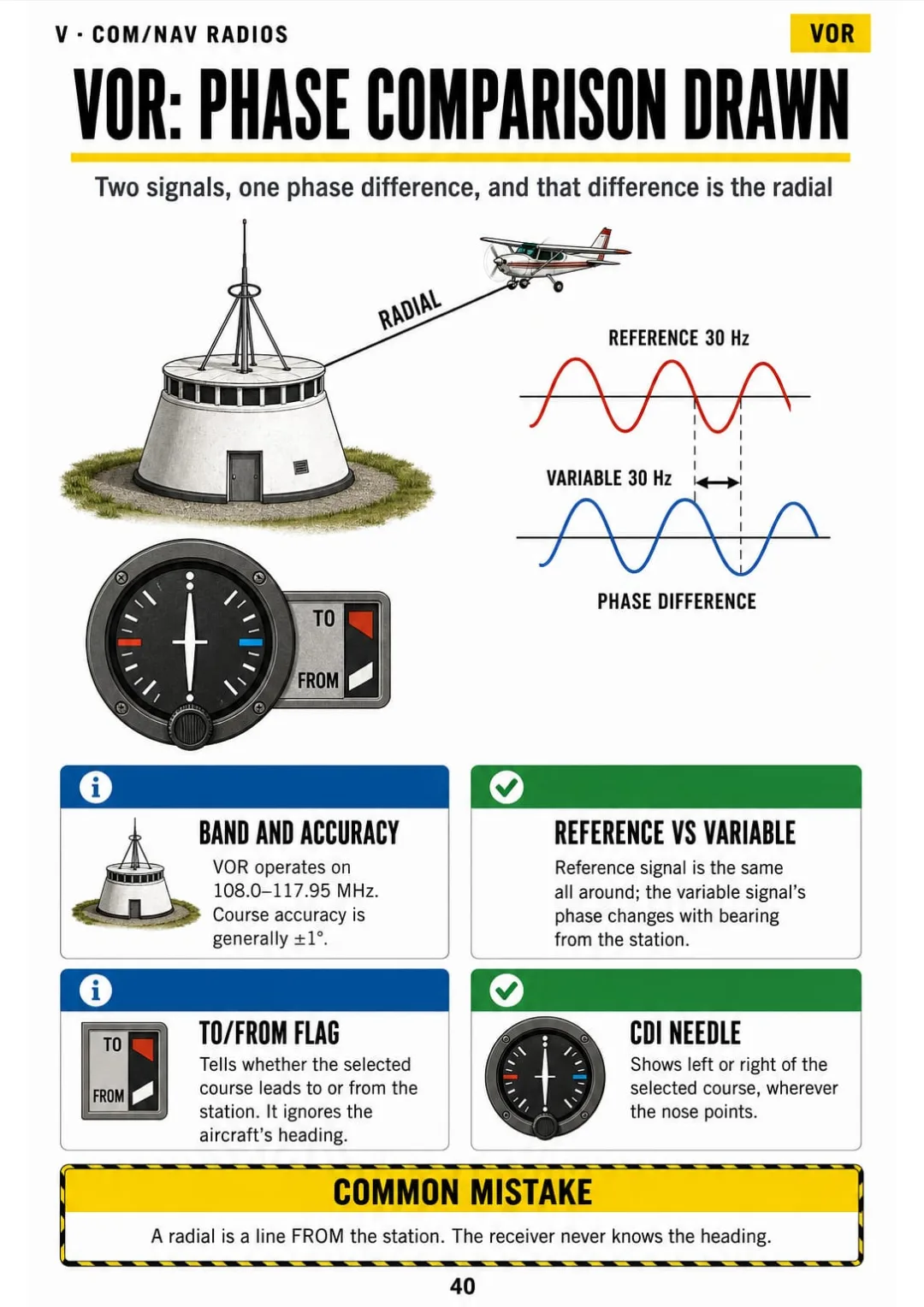
You open the VOR page and the reference phase and the variable phase are drawn side by side, with the radial coming out of the difference and the 108.0–117.95 MHz band in the box.

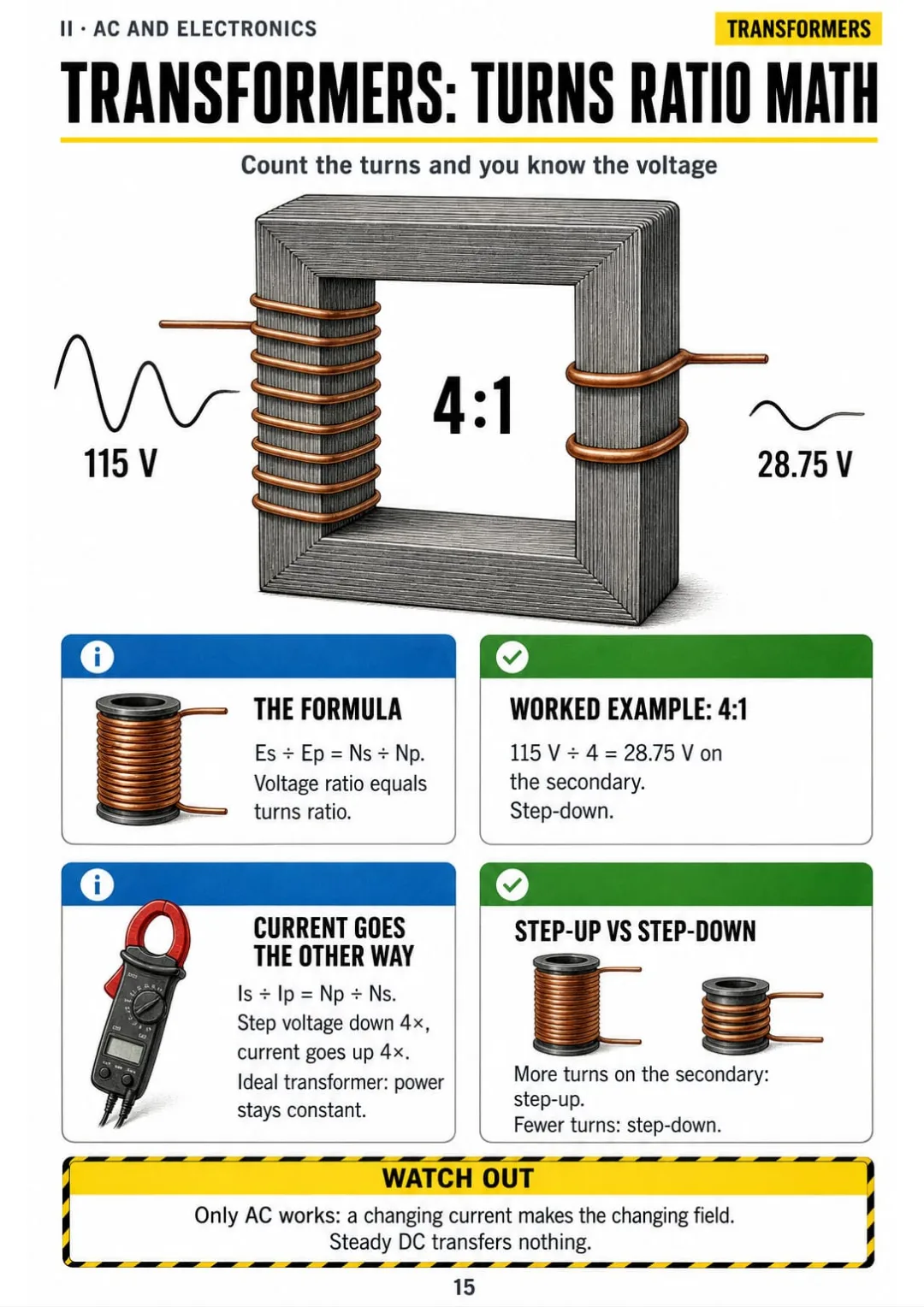
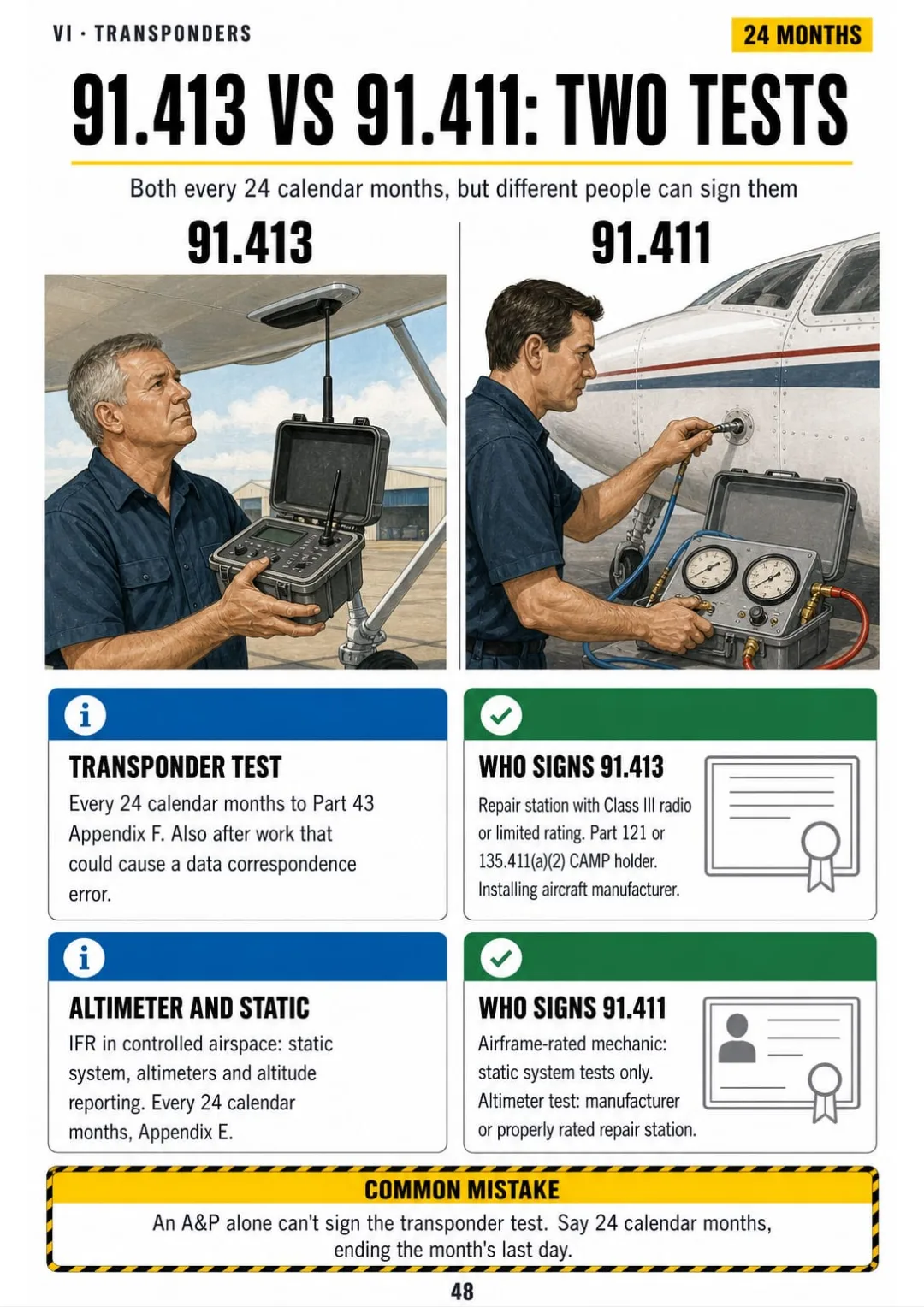
Same with the rest: wire sizing on the AC 43.13-1B chart, the path from battery to avionics bus, the 91.413 and 91.411 tests, the transformer turns ratio. Each one is its own page.
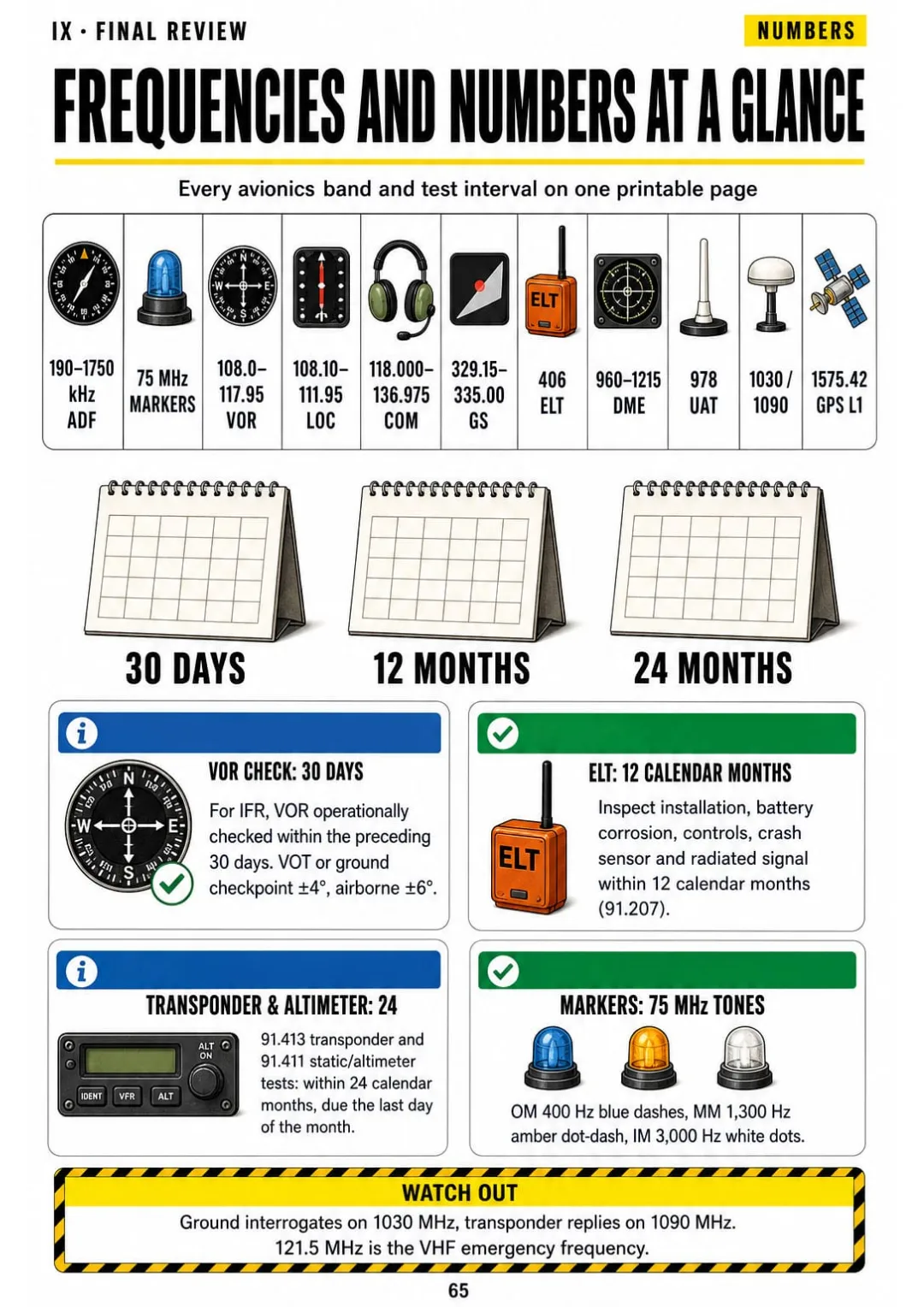
Avionics Technician Illustrated is 9 parts and 64 topics, all drawn, and it ends with a final review: frequencies at a glance, a formulas card and a pre-return-to-service checklist.
What you see drawn, you don't have to memorize.
Voltage, current and resistance, Ohm's law with a worked example, power, series and parallel circuits, the three faults and 14 V vs 28 V systems.
The AC sine wave and RMS, capacitors and inductors, transformers, diodes and rectifiers, transistors, logic gates and decibels.
The power distribution map from battery to bus, alternators and regulators, breakers and fuses, relays, grounding and bonding, and static wicks.
AWG gauge, wire sizing with the AC 43.13-1B chart, voltage drop, wiring diagrams, marking, crimping, splices, connectors, routing and shielding.
The aviation RF spectrum, antennas, VHF COM, SWR, VOR and its accuracy checks, ILS, marker beacons, DME and ADF, and GPS/WAAS.
Transponder basics, squawk codes and encoders, the 91.411 and 91.413 tests, ADS-B Out, the 406 MHz ELT, air data, AHRS and autopilot basics.
The multimeter, the megger, ramp test sets and the oscilloscope, the 6-step troubleshooting method, half-split isolation and intermittent faults.
Who can do what under Parts 43, 65 and 145, major vs minor alterations and Form 337, the 43.9 logbook entry, weight and balance and approved data.
Frequencies and numbers at a glance, the formulas card, a pre-return-to-service checklist and the most frequent mix-ups.
At the end of the book: Final review: frequencies at a glance, a formulas card, a pre-return-to-service checklist and the most frequent mix-ups.
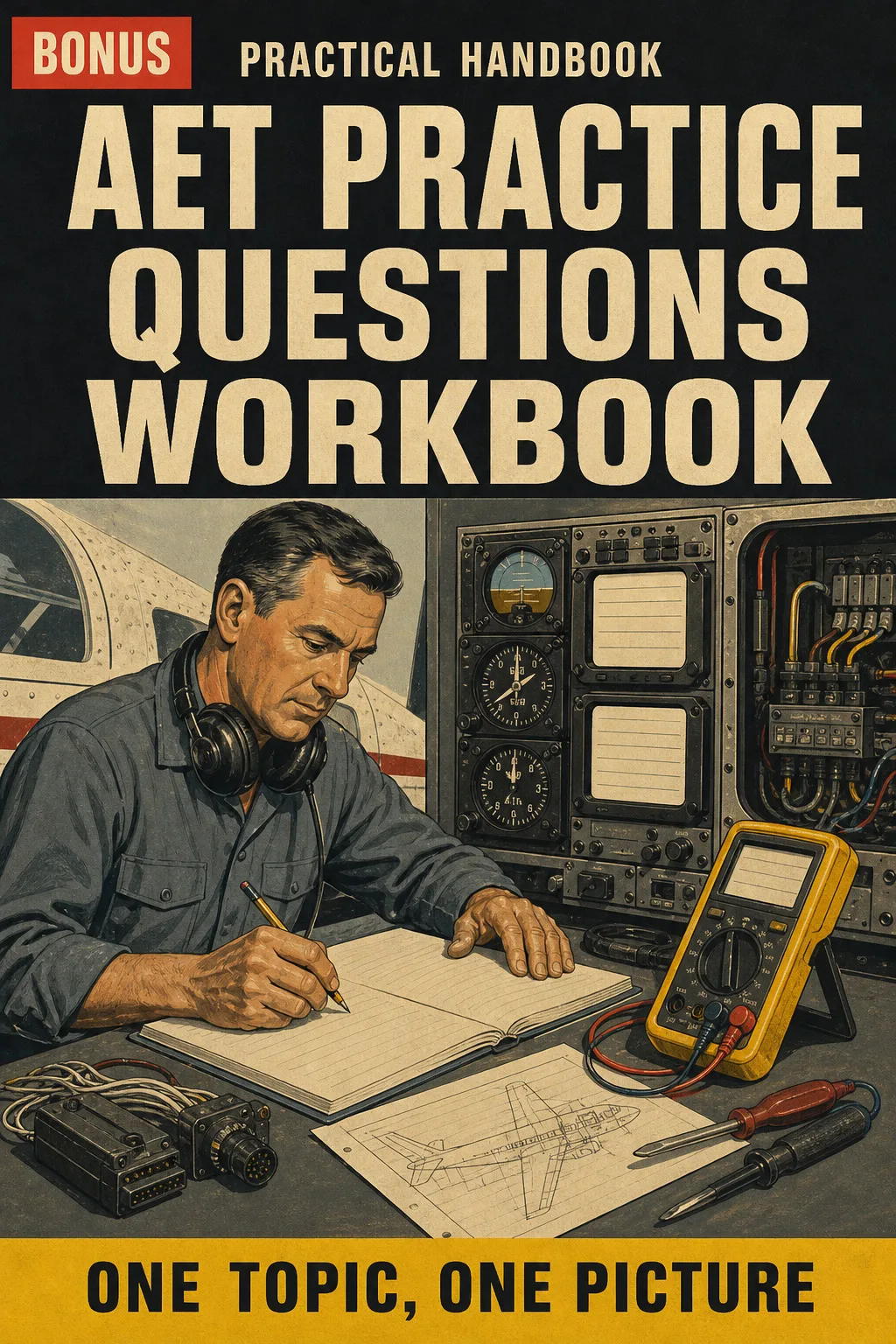
Exam-style questions with every answer explained, sorted by topic, so you find your weak spots before test day, not during it.

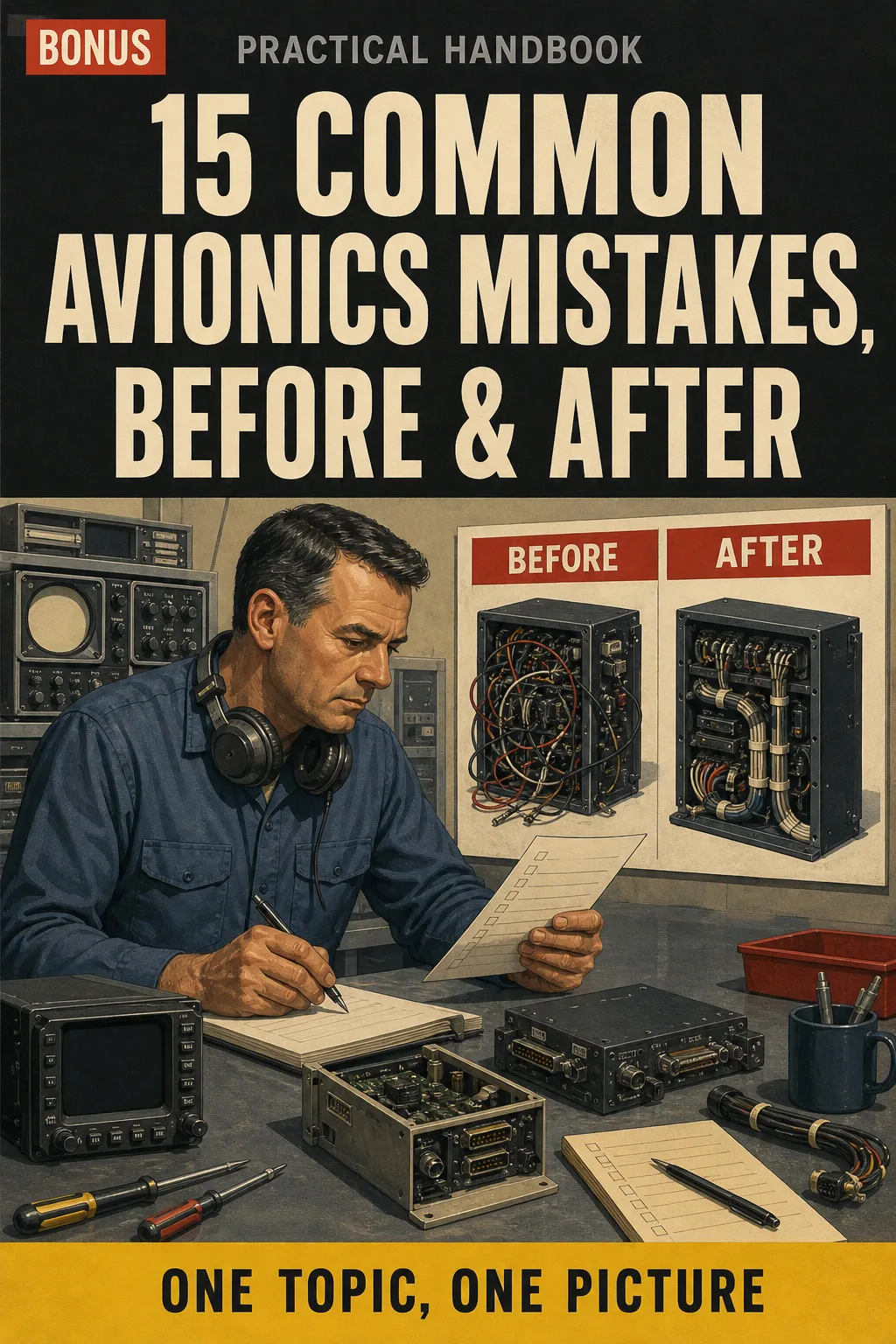
The most frequent wiring, bonding and troubleshooting mistakes, each one drawn wrong and then right, so you catch them on the bench.
📄 This is a digital PDF book sent to your email: nothing is printed or shipped.
PDF by email: We email you Avionics Technician Illustrated as a PDF, together with the two free books. It's a single payment: no installments, no extra charges.
Coming from military avionics, A&P work, cars, marine or telecom, you get the civil aircraft side in order: every system drawn the same way, plus the FAA paperwork, from Part 43 to the logbook entry.
You review by part, one page per topic, and check your weak spots with the practice workbook before test day.
You keep the numbers, the wiring rules and the 6-step method printed at the bench, ready to explain why you did the job that way.
📄 This is a digital PDF book sent to your email: nothing is printed or shipped.
Try Avionics Technician Illustrated for 30 days, bonus books included.
We refund everything if the file won't open, if the book isn't what you see here, if you were charged twice or if the email doesn't arrive. Just email us.
You pay once. No subscriptions.
Yes. It starts from the circuit basics, but the point is to put what you already know in one order. It follows the areas the AET covers: DC and AC, electronics, wiring, radios, test equipment and troubleshooting. Check the full index above against your exam's topic list.
From the FAA Aviation Maintenance Technician Handbooks (General and Airframe, the electrical and avionics chapters), AC 43.13-1B Chapter 11 and 14 CFR Parts 43, 65, 91 and 145. It's written for US work: FAA rules, US frequencies, AWG wire. It isn't the NCATT question bank: compare the index with the current AET objectives on the NCATT site before you buy.
No. It's an independent study book, not published or endorsed by the FAA, NCATT, ASTM or any school. It doesn't give you a certificate or count as training hours: the AET is earned by passing the NCATT exam, and a repairman certificate depends on the FAA requirements of Part 65. This book is what you study and review with.
No. It's study and review material. On the airplane you always work from approved data, the manufacturer's instructions and your training.
No. They're written for this book, in exam style, to help you review. They aren't official questions from any exam.
The book and the 2 bonus books arrive as PDFs by email, at the address you enter at checkout.
No. It's a one-time payment.
We don't ship paper copies. The PDF is made to print at home or at a print shop, so you can keep the pages you use most at the bench or in the hangar.
You have 30 days. We refund everything if the file won't open, if the book isn't what you see on this page, if you were charged twice or if the email doesn't arrive: just email us.
No more rereading with nothing sticking.
Wire sizing, the bus and the VOR: you see them drawn, and that's it.
You walk into the exam and the hangar knowing where everything is.
Drawings make studying faster.
The book is right below.
One-time payment: US$ 27 · Guarantee: 30 days · PDF by email
YES, I WANT AVIONICS TECHNICIAN ILLUSTRATED FOR US$ 27📄 This is a digital PDF book sent to your email: nothing is printed or shipped.